Attain Excellence with Culinary Exam
Get All Practice Questions
Free Trial Practice Questions

Explore every domain tested on your Culinary Exam. Expand each section to see the subtopics you need to master.
Principles of food safety, sanitation standards, and safe food handling practices in varied kitchen environments.
Core nutritional concepts, dietary restrictions, and healthy cooking techniques tailored for private clients.
Advanced culinary techniques, cooking methods, and ingredient knowledge required for executive-level food preparation.
Designing menus tailored to client preferences, dietary needs, and seasonal availability while managing quality.
Financial principles of running a culinary operation, including yield testing, pricing, and budget management.
Leadership, communication, and management skills necessary for overseeing kitchen staff and client relations.
The entrepreneurial and operational aspects of running a personal chef business, including marketing, legalities, and logistics.
Test your knowledge with these free preview flashcards. Click a card to flip and reveal the answer, then use the arrows to navigate through the deck. Upgrade for the complete flashcard set covering every exam topic.
Get All FlashcardsWhat does the acronym PCEC stand for within the American Culinary Federation?
Click to flipPersonal Certified Executive Chef.
This certification designates an advanced-level personal chef with extensive culinary and business management experience.
What is the FDA minimum safe internal cooking temperature for poultry?
Click to flip165°F (74°C) for at least 15 seconds.
This applies to chicken, turkey, duck, and any stuffed meats or pastas.
What is the Temperature Danger Zone where bacteria multiply most rapidly?
Click to flipBetween 41°F and 135°F (5°C to 57°C).
Food should not be left in this temperature range for more than 4 hours cumulative.
What is the difference between cross-contamination and cross-contact?
Click to flipCross-contamination refers to the transfer of harmful pathogens, while cross-contact refers to the transfer of food allergens.
Cooking kills most pathogens (contamination) but does not destroy allergens (contact).
What is the primary purpose of an initial client consultation for a personal chef?
Click to flipTo accurately assess the client's dietary needs, flavor preferences, allergies, and kitchen equipment.
A thorough intake questionnaire is essential for successful menu planning and avoiding allergic reactions.
What is the 'plus-cost' pricing model often used by personal chefs?
Click to flipThe chef charges a flat professional fee for their labor and services, while the client pays the exact cost of the groceries separately.
This model ensures the chef's profit margin isn't negatively affected by fluctuating food prices.
A client with Celiac disease must strictly avoid which protein?
Click to flipGluten, which is found in wheat, barley, rye, and triticale.
Even trace amounts of gluten from cross-contact on cutting boards or pans can cause severe autoimmune reactions.
What does the FIFO method stand for in food storage?
Click to flipFirst In, First Out.
This inventory rotation method ensures older items are used before newer deliveries to minimize spoilage and waste.
What are the seven principles of a HACCP plan?
Click to flipHazard analysis, critical control points (CCPs), critical limits, monitoring procedures, corrective actions, verification, and record-keeping.
HACCP stands for Hazard Analysis and Critical Control Point.
In culinary techniques, what is emulsification?
Click to flipThe process of temporarily or permanently combining two unmixable liquids, such as oil and vinegar.
Egg yolks and mustard are common emulsifying agents used to stabilize mixtures like mayonnaise or vinaigrettes.
What is the Maillard reaction?
Click to flipA chemical reaction between amino acids and reducing sugars that gives browned food its distinctive flavor.
This typically occurs rapidly at temperatures from 280°F to 330°F (140°C to 165°C).
What is the two-stage cooling method for safely storing hot foods?
Click to flipCool food from 135°F to 70°F within 2 hours, and then from 70°F to 41°F or lower within the next 4 hours.
The total cooling time must not exceed 6 hours to prevent dangerous bacterial growth.
Why is General Liability Insurance crucial for a Personal Chef?
Click to flipIt protects the chef's business against financial claims of bodily injury (like foodborne illness) or property damage (like a kitchen fire) occurring at a client's home.
Clients and event venues often require proof of insurance before allowing a chef to work on their premises.
What are the three primary energy-yielding macronutrients a chef must balance in nutritional menu planning?
Click to flipCarbohydrates, proteins, and fats.
Understanding macronutrient balance is especially important when cooking for clients with specific fitness or health goals.
How do you calculate the Yield Percentage of a produce item?
Click to flipDivide the Edible Portion (EP) weight by the As Purchased (AP) weight.
Formula: EP / AP = Yield %. This calculation is vital for accurate grocery budgeting and purchasing.
What is the primary difference between braising and stewing?
Click to flipBraising typically involves cooking large cuts of meat partially submerged in liquid, while stewing involves small, uniform pieces of meat fully submerged.
Both are combination cooking methods utilizing dry heat (searing) followed by moist heat (simmering).
Why is a standardized recipe essential for a personal chef business?
Click to flipIt ensures consistency in yield, portion size, flavor, and cost every time the dish is prepared.
This is especially crucial when scaling recipes up or down for different family sizes.
When transporting prepared meals to a client, what is the safest way to maintain food temperatures?
Click to flipUse insulated carriers with commercial ice packs for cold food (below 41°F) and dedicated heat-retaining containers for hot food (above 135°F).
Always track departure and arrival temperatures to ensure food safety compliance.
What distinguishes a vegan diet from a lacto-ovo vegetarian diet?
Click to flipA vegan diet excludes all animal products, including dairy, eggs, and honey, whereas a lacto-ovo vegetarian diet includes dairy and eggs.
Personal chefs must always verify hidden animal by-products, like gelatin or certain food dyes, for vegan clients.
How many Continuing Education Hours (CEHs) are required to renew the PCEC certification every 5 years?
Click to flip80 Continuing Education Hours.
At least 8 of these hours must be specifically focused on food safety and sanitation.
You've reached the end of the free preview. Unlock the full deck with all 200+ flashcards covering every exam topic.
Get Premium AccessExplore the interconnected concepts you need to master for your exam. This free preview reveals the breadth of topics covered. Upgrade to unlock the full mind map with every concept, sub-topic, and study pathway mapped out.
Get Full Mind MapMaster your Culinary Exam with the top study resource on the market
Get All Practice Questions
Gain unrestricted access to practice questions anytime and anywhere you require. Culinary Exam operates effortlessly across all mobile devices, laptops, and electronic gadgets.
Get All Practice Questions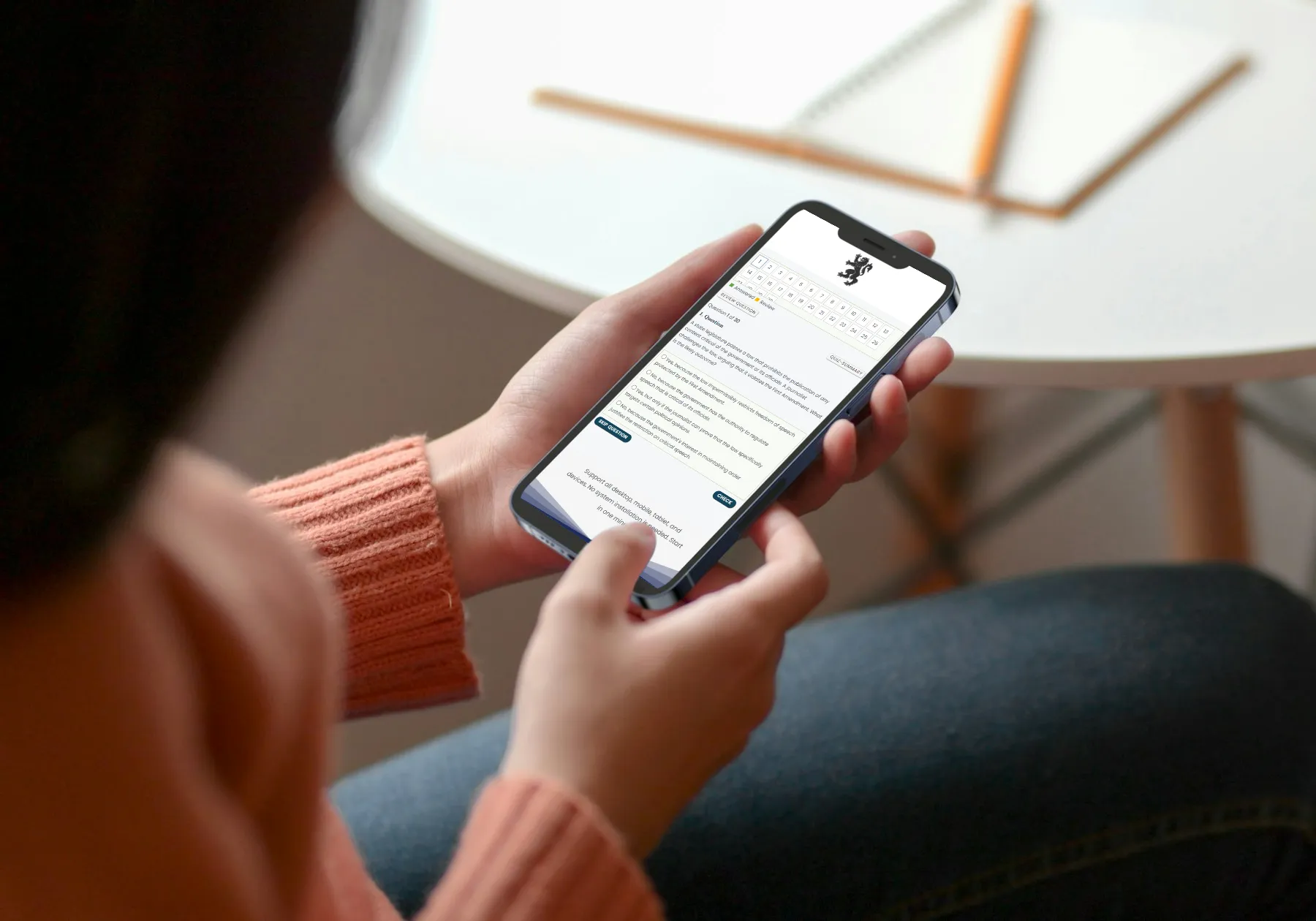
Every practice question, study note, and mind map is carefully crafted to help candidates like you conquer the Culinary Exam with ease.
Get All Practice Questions
Reinforce your learning with premium video study notes that cover the most critical topics for your Culinary Exam. Watch, review, and retain — at your own pace.
Get All Study Materials
Culinary Exam comes with a 100% success guarantee, but we go even further. We don’t just want you to pass; we want you to excel. Picture your colleagues' faces when they see your new professional credential on LinkedIn. Think about how much easier your next promotion will be when you have the certification to back it up.
Here’s our iron-clad promise: if you don’t pass the exam within one year, we’ll extend your full access completely free of charge — no questions asked, no hoops to jump through, and no proof required. Study at your own pace knowing that you’re fully covered.
Whether life got busy, you need extra time to prepare, or you simply want another round of practice — we’ve got you. Your success is our reputation, and we’re putting our money where our mouth is with this unconditional free extension guarantee.
Our practice questions are meticulously designed to replicate the real Culinary Exam experience. Every question comes with thorough explanations, clarifying why the correct answer is accurate and why the other choices fall short.
Secure instant access once your payment is confirmed. You will promptly receive full access to a wide range of study materials, featuring practice questions, study guides, and detailed answer explanations.
If you do not obtain Culinary Exam certification after utilizing our platform, we will prolong your access at no additional cost until you succeed, valid for one year from the date of purchase.
Culinary Exam is crafted to function seamlessly across all devices. Study with ease on smartphones, tablets, iPads, and computers using our flexible platform design.
Our questions mirror the format and challenge of the Culinary Exam while adhering to ethical guidelines. We respect the copyrights of the official body and create unique content that promotes genuine understanding rather than simple rote learning.
An official invoice will be emailed to you immediately after your purchase. This invoice will contain your contact information, details about the product, the payment amount, and the date of the transaction for your records.
Our past candidates love us. Let's see how they think about our service
Grateful for Culinary Exam for their exceptional resources. The study materials were thorough and straightforward. Their emphasis on practical examples helped me grasp Culinary Exam concepts effortlessly.
As a full time professional, Culinary Exam adaptable study approach was ideal. The mobile application allowed me to study while commuting. Their extensive question bank is impressive.
I used to feel overwhelmed by the Culinary Exam, but Culinary Exam turned studying into a manageable and even enjoyable experience. I truly appreciate this resource.
Just completed my Culinary Exam with the help of Culinary Exam. The practice questions were tough yet reasonable. The thorough explanations clarified the reasoning behind each response.
Culinary Exam transformed my preparation into an enjoyable experience. The engaging quizzes and real-world case studies kept my interest high. The performance tracking tools were invaluable.
Preparing for the Culinary Exam felt daunting until I discovered Culinary Exam. Their organized strategy and weekly study schedules helped me stay focused. I aced the exam with flying colors.
Join thousands of successful professionals who have enhanced their careers using our platform.
Enable Premium Access