Attain Excellence with Culinary Exam
Get All Practice Questions
Free Trial Practice Questions

Explore every domain tested on your Culinary Exam. Expand each section to see the subtopics you need to master.
Focuses on adult learning theories, classroom management, and effective instructional delivery methods within a culinary environment.
Covers the design and implementation of culinary programs, including writing objectives, syllabi, and daily lesson plans.
Details the methods used to measure student learning, including both written tests and practical culinary evaluations.
Ensures the educator possesses the foundational and advanced culinary skills necessary to teach students.
Tests knowledge of safe food handling, sanitation standards, and the ability to teach these concepts to future culinarians.
Covers dietary guidelines, nutritional science, and the application of these principles in menu design and recipe modification.
Addresses the administrative and leadership skills required to manage a culinary classroom, lab, or commercial kitchen.
Test your knowledge with these free preview flashcards. Click a card to flip and reveal the answer, then use the arrows to navigate through the deck. Upgrade for the complete flashcard set covering every exam topic.
Get All FlashcardsWhat is the primary purpose of a rubric in culinary education?
Click to flipA rubric provides a standardized set of criteria to ensure objective, consistent grading of student performance.
Rubrics are especially critical in practical exams to evaluate technique, sanitation, and taste objectively.
Define 'formative assessment' within a culinary lab setting.
Click to flipIt is the ongoing, informal feedback given to students during the cooking process to help them improve skills before a final grade is assigned.
Example: Tasting a student's sauce and suggesting they adjust the seasoning before final plating.
A student struggles with basic knife skills; what instructional scaffolding technique should you use?
Click to flipDemonstrate the skill slowly, guide the student hand-over-hand if necessary, and observe them during independent practice.
Scaffolding provides temporary support that is gradually removed as the student gains competence.
What is the primary difference between pedagogy and andragogy?
Click to flipPedagogy is the method and practice of teaching children, whereas andragogy focuses on the principles of teaching adult learners.
Andragogy emphasizes self-directed learning and connecting new concepts to the learner's prior life experiences.
According to ACF standards, what is the minimum food safety requirement for a CCE?
Click to flipA CCE must hold a current, recognized food safety manager certification, such as ServSafe.
Sanitation is the foundation of culinary arts; educators must model and enforce strict food safety standards.
What are the three domains of learning in Bloom's Taxonomy?
Click to flipThe three domains are Cognitive (knowledge), Affective (attitude/behavior), and Psychomotor (physical skills).
Culinary education relies heavily on the Psychomotor domain, but all three are essential for developing a professional chef.
What is the function of a 'lesson plan' in culinary instruction?
Click to flipIt serves as a detailed roadmap for a class session, outlining learning objectives, instructional activities, materials needed, and assessment methods.
A strong lesson plan keeps the instructor on track and ensures all required curriculum standards are met.
If a sudden grease fire occurs in the student lab, what is the educator's immediate first priority?
Click to flipEnsure the physical safety of all students by evacuating the immediate area before attempting to extinguish the fire.
Life safety always supersedes equipment preservation or food production.
Explain the 'flipped classroom' model in culinary education.
Click to flipStudents learn the theoretical concepts at home via videos or reading, reserving class time entirely for hands-on lab practice and instructor guidance.
This maximizes valuable kitchen lab time for psychomotor skill development.
What is a summative assessment in a culinary program?
Click to flipIt is a final evaluation of student learning at the end of an instructional unit, such as a final written exam or a capstone practical cooking test.
Unlike formative assessment, summative assessment is used to assign a final grade.
How does 'mise en place' function as both a culinary technique and a classroom management tool?
Click to flipIt ensures that all ingredients and tools are prepped for cooking, while also organizing the students' workflow to prevent chaos in the lab.
Teaching students mental and physical mise en place reduces lab accidents and time waste.
Differentiate between reliability and validity in culinary testing.
Click to flipReliability means the test produces consistent results over time, while validity means the test actually measures the specific skill it claims to measure.
A practical exam on mother sauces is valid if it actually requires students to make mother sauces.
What is the role of an industry advisory committee in a culinary arts program?
Click to flipThey provide real-world feedback to ensure the curriculum meets current industry standards and assist with equipment acquisition or student job placement.
ACF accredited programs are required to have active advisory committees.
What does 'differentiated instruction' mean in a diverse culinary classroom?
Click to flipIt is the practice of tailoring teaching methods, resources, and pacing to accommodate students with different learning styles and abilities.
Example: Providing both written recipes and visual step-by-step photos for a complex baking technique.
How should an instructor address a student who consistently arrives in a dirty uniform?
Click to flipPrivately address the issue with the student, explain the safety and professional standards required, and enforce the program's disciplinary policy.
Public reprimands can damage the student-teacher relationship; private correction maintains dignity.
How many Continuing Education Hours (CEHs) are required to recertify as a CCE?
Click to flipA CCE must complete 80 Continuing Education Hours every five years to maintain their certification.
These hours ensure the educator stays current with both culinary trends and educational methodology.
What is the primary benefit of utilizing peer evaluation during a culinary tasting panel?
Click to flipIt helps students develop a critical palate and professional communication skills while exposing them to diverse feedback.
Peer evaluation teaches students how to give and receive constructive criticism.
Define 'kinesthetic learning' in the context of culinary arts.
Click to flipIt is a learning style where students learn best by carrying out physical activities, such as chopping vegetables or kneading dough.
Culinary arts is predominantly a kinesthetic field.
Contrast an instructional demonstration with a traditional lecture.
Click to flipA demonstration visually shows students how to perform a physical skill, whereas a lecture verbally delivers theoretical or historical information.
Effective culinary educators often combine both, explaining the 'why' (lecture) while showing the 'how' (demonstration).
Why are clear learning objectives essential before starting a culinary lab session?
Click to flipThey provide students with specific, measurable expectations of what they must know and be able to do by the end of the class.
Objectives should be SMART: Specific, Measurable, Achievable, Relevant, and Time-bound.
You've reached the end of the free preview. Unlock the full deck with all 200+ flashcards covering every exam topic.
Get Premium AccessExplore the interconnected concepts you need to master for your exam. This free preview reveals the breadth of topics covered. Upgrade to unlock the full mind map with every concept, sub-topic, and study pathway mapped out.
Get Full Mind MapMaster your Culinary Exam with the top study resource on the market
Get All Practice Questions
Gain unrestricted access to practice questions anytime and anywhere you require. Culinary Exam operates effortlessly across all mobile devices, laptops, and electronic gadgets.
Get All Practice Questions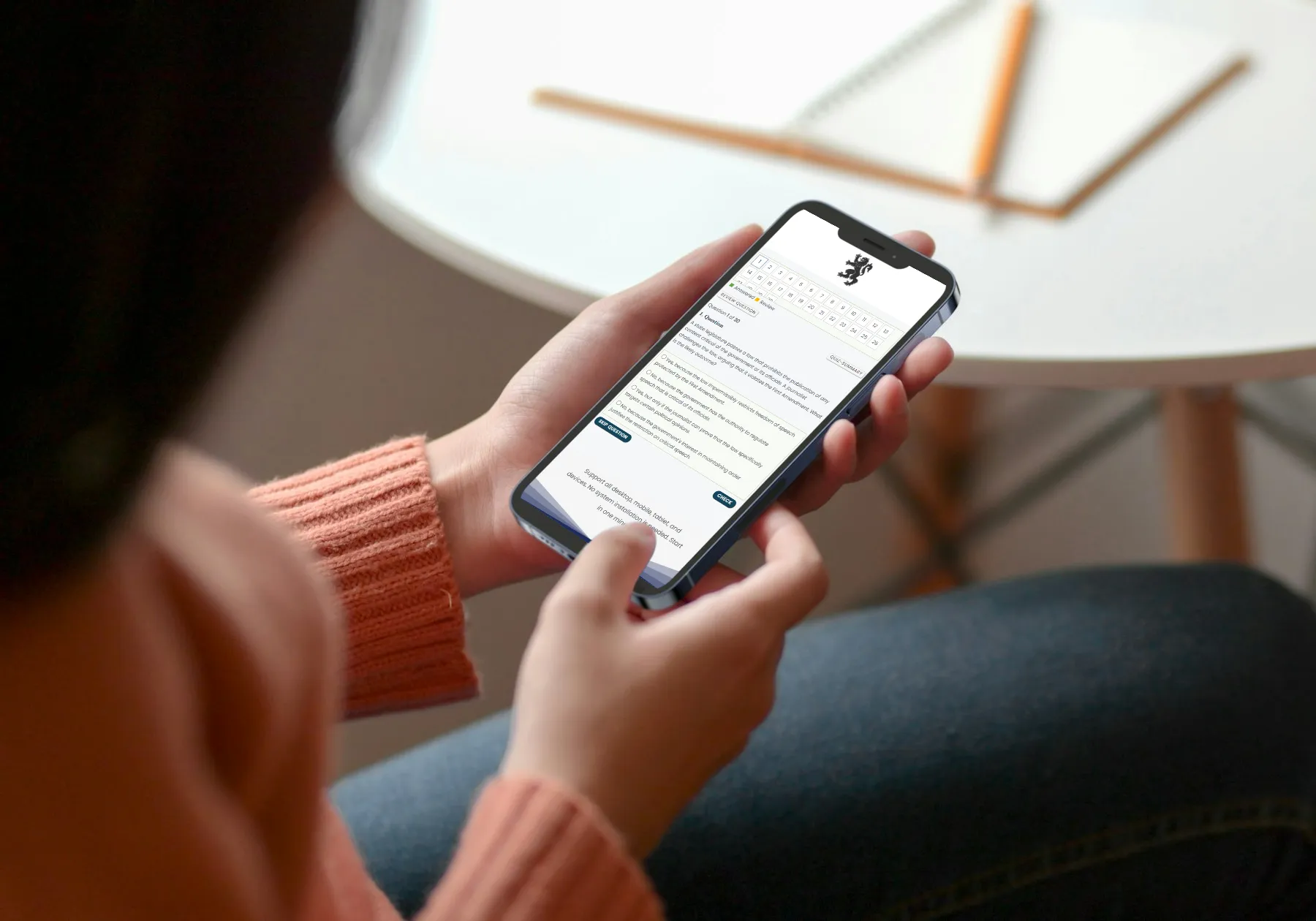
Every practice question, study note, and mind map is carefully crafted to help candidates like you conquer the Culinary Exam with ease.
Get All Practice Questions
Reinforce your learning with premium video study notes that cover the most critical topics for your Culinary Exam. Watch, review, and retain — at your own pace.
Get All Study Materials
Culinary Exam comes with a 100% success guarantee, but we go even further. We don’t just want you to pass; we want you to excel. Picture your colleagues' faces when they see your new professional credential on LinkedIn. Think about how much easier your next promotion will be when you have the certification to back it up.
Here’s our iron-clad promise: if you don’t pass the exam within one year, we’ll extend your full access completely free of charge — no questions asked, no hoops to jump through, and no proof required. Study at your own pace knowing that you’re fully covered.
Whether life got busy, you need extra time to prepare, or you simply want another round of practice — we’ve got you. Your success is our reputation, and we’re putting our money where our mouth is with this unconditional free extension guarantee.
Our practice questions are meticulously designed to replicate the real Culinary Exam experience. Every question comes with thorough explanations, clarifying why the correct answer is accurate and why the other choices fall short.
Secure instant access once your payment is confirmed. You will promptly receive full access to a wide range of study materials, featuring practice questions, study guides, and detailed answer explanations.
If you do not obtain Culinary Exam certification after utilizing our platform, we will prolong your access at no additional cost until you succeed, valid for one year from the date of purchase.
Culinary Exam is crafted to function seamlessly across all devices. Study with ease on smartphones, tablets, iPads, and computers using our flexible platform design.
Our questions mirror the format and challenge of the Culinary Exam while adhering to ethical guidelines. We respect the copyrights of the official body and create unique content that promotes genuine understanding rather than simple rote learning.
An official invoice will be emailed to you immediately after your purchase. This invoice will contain your contact information, details about the product, the payment amount, and the date of the transaction for your records.
Our past candidates love us. Let's see how they think about our service
Grateful for Culinary Exam for their exceptional resources. The study materials were thorough and straightforward. Their emphasis on practical examples helped me grasp Culinary Exam concepts effortlessly.
As a full time professional, Culinary Exam adaptable study approach was ideal. The mobile application allowed me to study while commuting. Their extensive question bank is impressive.
I used to feel overwhelmed by the Culinary Exam, but Culinary Exam turned studying into a manageable and even enjoyable experience. I truly appreciate this resource.
Just completed my Culinary Exam with the help of Culinary Exam. The practice questions were tough yet reasonable. The thorough explanations clarified the reasoning behind each response.
Culinary Exam transformed my preparation into an enjoyable experience. The engaging quizzes and real-world case studies kept my interest high. The performance tracking tools were invaluable.
Preparing for the Culinary Exam felt daunting until I discovered Culinary Exam. Their organized strategy and weekly study schedules helped me stay focused. I aced the exam with flying colors.
Join thousands of successful professionals who have enhanced their careers using our platform.
Enable Premium Access